Heat pump repair in Clermont, FL is usually a short list: a failed capacitor or contactor, a sticking reversing valve, a defrost control fault, low refrigerant or a burned-out heat strip. The technician tests the system in both heating and emergency-heat modes to find which one, and gives you the price before any work starts.
Most Clermont homes heat with the equipment that cools them: a heat pump outside and an air handler with electric heat strips inside. That system rarely heats, so problems hide until the first cold morning of December, January or February, when the house will not warm up, the vents smell like burning, or a breaker trips.
We answer 24/7 and send the nearest available HVAC contractor for heat pump repair in Clermont, FL and the towns around it, along with heat strip and gas furnace repair. The contractor diagnoses the system first and gives you the price before any work starts. Every HVAC contractor we send is licensed and insured in Florida.
Heating problems we repair in Clermont
Heating repair here rarely means a furnace worn out by hard winters. It usually means a heat pump that cooled fine all summer and now blows lukewarm air. The complaints we hear most:
- No heat at all: a thermostat setting, a tripped breaker, a failed capacitor or contactor, or a control fault.
- Heater not working well enough: low refrigerant, a sticking reversing valve or a burned-out heat strip element.
- Burning smell: a brief dust burn-off is normal. A lingering wiring or plastic smell is not.
- Outdoor unit iced solid: a defrost control or fan motor problem.
The capacitor that stops your heat in January is the same part behind many summer AC repair calls. Contractors cover Minneola, Groveland, Four Corners and the rest of our service area.
Heat pump not heating: reversing valve, defrost control and low charge
A heat pump heats by running the refrigeration cycle backward.
Reversing valve
The thermostat energizes a solenoid on the reversing valve through the O or B wire. A failed solenoid coil is a quick swap. A stuck valve body means recovering refrigerant, brazing in a new valve, evacuating and recharging, work only an EPA Section 608 certified technician can do.
Defrost control
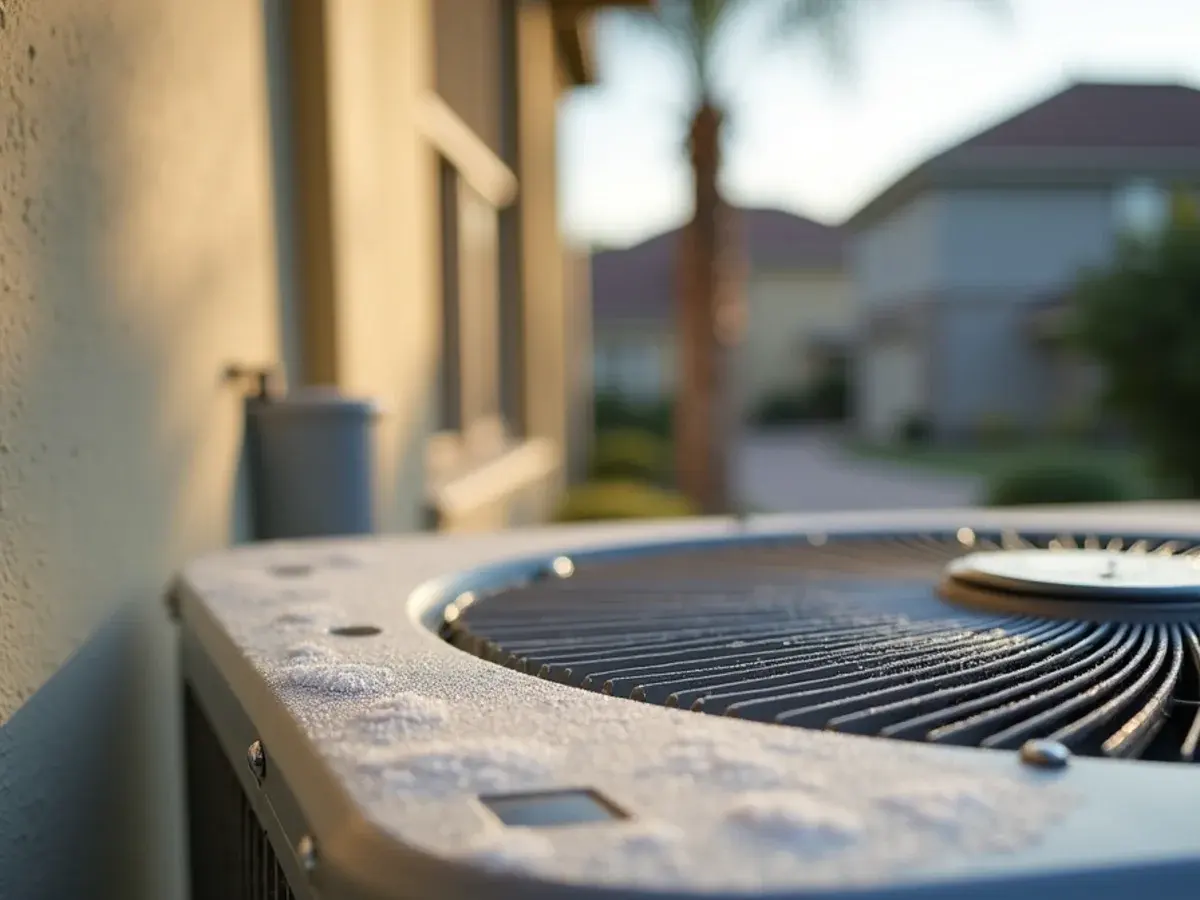
On damp mornings the outdoor coil frosts over, and a defrost board briefly switches the unit to cooling to melt it while the heat strips cover the house. If the board, its sensor or the fan relay fails, the coil turns to ice. Our guide to a heat pump blowing cold air on a cold morning explains what is normal.
Low refrigerant charge
A heat pump short on refrigerant heats poorly before its cooling suffers noticeably. The fix is repairing the leak and weighing in the correct charge, not a yearly top-off.
Electric heat strips: burning smell, tripped breakers and high bills
Nearly every air handler in Clermont's 2000s subdivisions has electric heat strips: resistance coils brought on in stages by a heat strip sequencer. They back up the heat pump on the coldest mornings and carry the house during defrost.
- Burning smell: smoke, or a melted-plastic smell on every cycle, means an overheated wire or a failing sequencer. Turn the heat off and call.
- Tripped breakers: a 240-volt breaker that trips the moment the heat starts points to a shorted element or an overheated lug. Resetting it again and again is not a fix.
- High bills: strips turn electricity into heat one for one, while a healthy heat pump moves several times more heat for the same power. Strips that never shut off mean the heat pump is not doing its share.
Electric heat strip repair usually means replacing an element, sequencer or limit switch, then checking the heater kit's wiring for heat damage.
Gas furnace repair for homes on natural gas
Gas heat is a minority in South Lake County, but some homes on Lake Apopka Natural Gas District lines run a gas furnace under the AC coil, and a few rural properties burn propane. Common gas furnace repairs:
- Ignition: a cracked hot surface igniter or a dirty flame sensor.
- Draft: a failed inducer motor, pressure switch or plugged condensate trap that locks the furnace out.
- Limit trips: a dirty filter or weak blower letting the heat exchanger overheat.
- Controls: a failed board or gas valve, usually flagged by a fault code.
Furnace repair after a long idle season often starts with clearing dust and insect nests from the burners and vent. The technician also inspects the heat exchanger and flue for cracks or loose joints that could leak carbon monoxide. Keep CO alarms working in any gas-heated home.
Why heat fails on the first cold morning in Central Florida
Winter lows in Clermont average around 50, which a heat pump handles easily. Then a cold front arrives, a few mornings run much colder, and every heat pump in the county is asked for full output at once. Weak spots show up fast:
- Reversing valves and sequencers that have not moved since last winter stick.
- Capacitors weakened by a summer of lightning and power surges fail on the first long run.
- Original builder-grade systems from the 1998 to 2010 boom are past the 10 to 15 years a Florida system usually lasts.
On a unit that age, read our guide on whether to repair or replace a 15-year-old AC, and ask the contractor to price heat pump replacement next to the repair.
Thermostat and emergency-heat settings explained
| Setting | What it does | When to use it |
|---|---|---|
| Heat | Runs the heat pump first and adds strips automatically | Normal winter use |
| Aux heat light | Shows the strips are helping, during defrost or recovery | Normal, unless it never goes off |
| Emergency heat | Locks out the outdoor unit and heats with strips only | Only when the heat pump has failed; costly to run |
| Fan Auto vs On | Auto runs the blower only while heating or cooling | Auto, so moisture is not blown back into the house |
Big setbacks cause most high-bill complaints: dropping to 62 overnight and jumping to 72 at dawn forces the strips on. Raise the set point two degrees at a time, or use a smart thermostat with adaptive recovery. Switch emergency heat off after the repair.
How a heating repair visit works
A heat pump can fail in heat mode while cooling perfectly, so the technician tests it the way it runs in winter, not the way it ran in August.
- Settings first. The thermostat mode, set point, emergency-heat switch and wiring to the O or B terminal are checked, because a setting causes more no-heat calls than people expect.
- Outdoor unit in heat mode. With a call for heat, the technician confirms the compressor and fan start, the reversing valve shifts and the supply air warms within a few minutes.
- Refrigerant and defrost. Pressures are read in heating mode, and the defrost board, sensor and fan relay are tested if the coil has been icing.
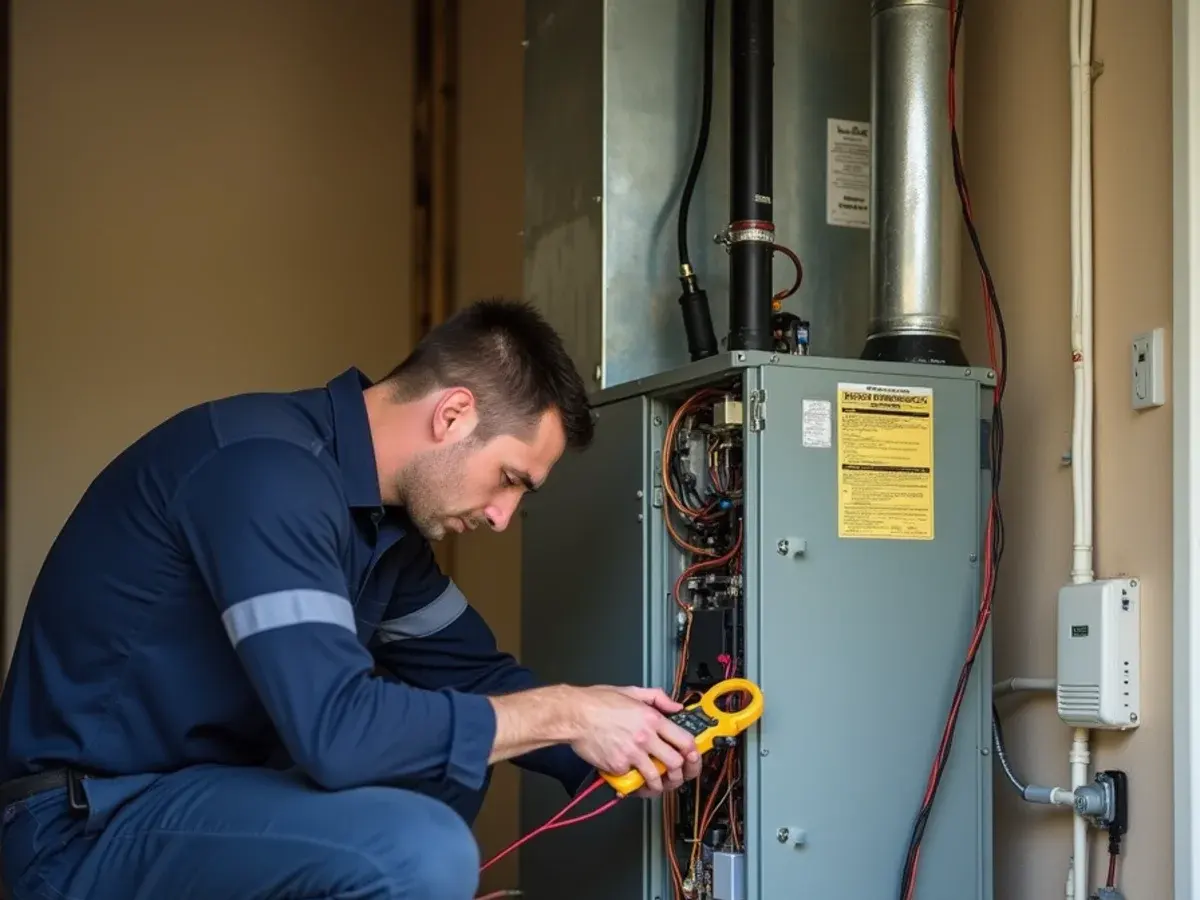
- Heat strips. Each element and the sequencer are checked with an amp clamp so you know whether every stage is carrying its share, and the wiring is inspected for heat damage.
- Price, then repair. You hear what failed and the price, the repair is made after you approve it, and the system is run through a full heating cycle, including defrost, before the technician leaves.
What affects heating repair cost
We do not publish prices. The contractor diagnoses the system and gives you the price before any work starts. What moves it:
- The part: a capacitor or flame sensor is a small repair; a reversing valve or compressor is a large one.
- Refrigerant work, which adds recovery, evacuation and recharge time.
- Access to an attic or closet air handler.
- Timing: nights, weekends and holidays can carry after-hours pricing, stated up front.
If you cannot tell a setting from a breakdown, run through our checklist for a system that stopped working, then call (321) 478-0693. We answer 24/7.
Why choose Sugarloaf Cooling for heating repair
- Answered on the cold nights. Cold snaps arrive overnight, and the call that matters is at 5 a.m. We answer 24/7, holidays included, and dispatch the nearest available contractor.
- Licensed and insured, and refrigerant-certified where it counts. Every HVAC contractor we send is licensed and insured in Florida. Reversing valve and charge work is done by technicians with EPA Section 608 certification.
- Tested in heat mode. The system is checked the way it fails in January, including the defrost cycle and each heat strip stage, not only the cooling side.
- The price before the part. Diagnosis comes first, then the price, then the repair you approve. After-hours rates, where they apply, are stated up front.
Heating repair across South Lake County
Cold mornings hit the whole area at once, but the calls differ. In Groveland, residents of the 55+ communities are home all day, so a heat pump that quits overnight is treated as urgent. The rural properties around Mascotte include some propane furnaces and older heat pumps on long refrigerant lines. The newer homes in Minneola are mostly on their first heat pump, where a stuck reversing valve or a wiring fault from the original install is the usual find. Winter Garden has a share of gas furnaces under AC coils, and vacation rentals around Four Corners need the heat working before winter guests arrive. Every community we cover is on the service areas page.
Heating Repair FAQ
Why does my heat smell like burning when I first turn it on?
Dust settles on the heat strips during the long cooling season and burns off the first few times they glow. That smell is normal and should be gone after the first hour or so of running. A smell that returns every cycle, visible smoke, or a melted-plastic odor is different. It can mean an overheated connection or a failing sequencer, so turn the system off and call.
Is it normal for a heat pump to steam or frost over outside in winter?
Yes, within limits. On cold, damp mornings light frost forms on the outdoor coil, and the unit runs a defrost cycle: the fan stops, the reversing valve shifts with a whoosh, and steam rises for a few minutes while the heat strips keep the house warm. Thick ice that never clears, ice on top of the unit or a fan that stays off points to a defrost board, fan motor or refrigerant problem.
Why is my electric bill so high when the heat runs?
Usually because the heat strips are doing the heat pump's job. Strips make one unit of heat for each unit of electricity, while a working heat pump moves several units of heat for the same power in mild weather. Common causes are low refrigerant, a stuck defrost cycle, a thermostat left on emergency heat, big overnight setbacks and leaky attic ducts.
Can you fix the heat the same day during a cold snap?
We answer 24/7 and send the nearest available HVAC contractor, but we do not promise arrival times. Cold snaps keep every heating contractor in Central Florida busy, and timing depends on the hour, the weather and the calls ahead of yours. Capacitors, contactors, sequencers and heat strip elements are often on the truck; a reversing valve or control board may need to be ordered. Emergency heat can keep the house warm in the meantime.
How do I know if the problem is the heat strips or the heat pump?
Look outside while the heat is calling. If the outdoor unit is running but the air inside is only lukewarm and the aux heat light stays on, the heat pump side is weak and the strips are covering for it, often a refrigerant, reversing valve or defrost problem. If the outdoor unit runs fine but heating fails when it is coldest, a heat strip element or sequencer may be out. If nothing outside runs at all, start with the breakers, then call.
When should I switch my thermostat to emergency heat?
Only when the outdoor unit has a problem: it is iced solid and not clearing, humming without running, damaged in a storm, or the technician tells you to. Emergency heat shuts the heat pump off and runs the strips alone, which keeps the house warm and protects the compressor, but it costs noticeably more to run. Switch it back to normal Heat as soon as the repair is done.