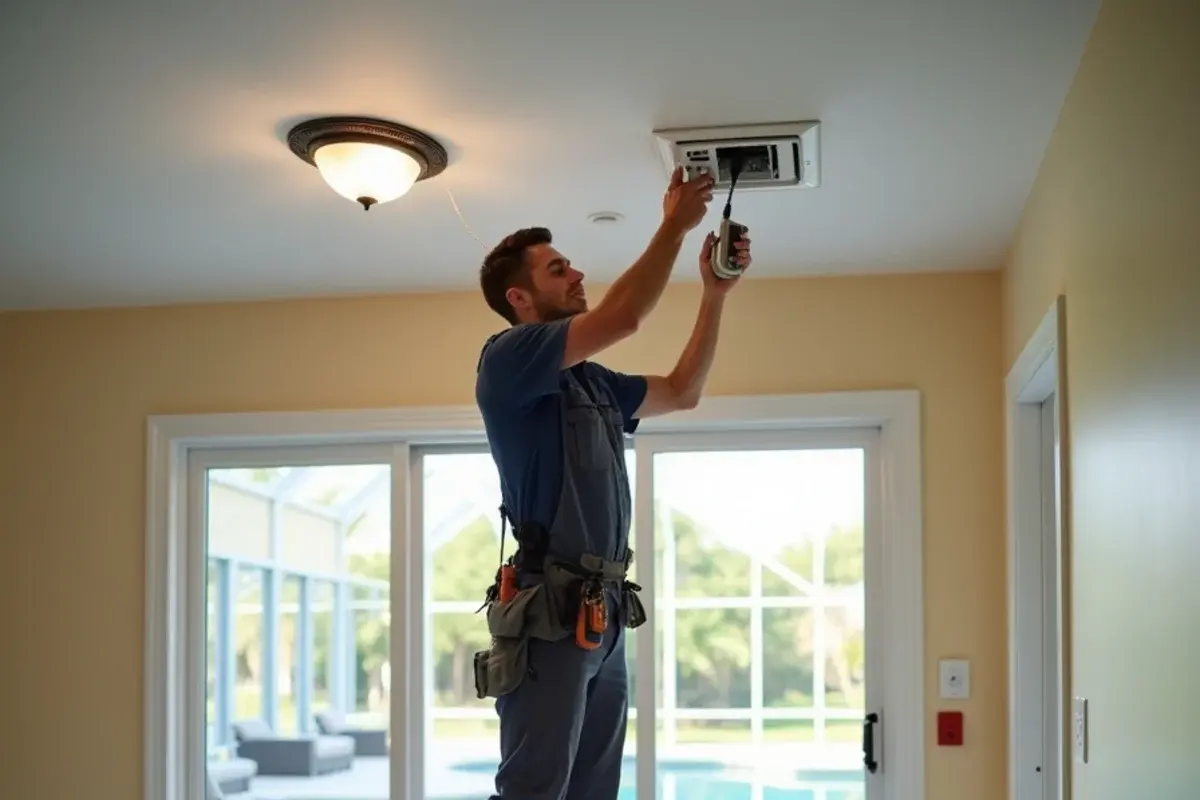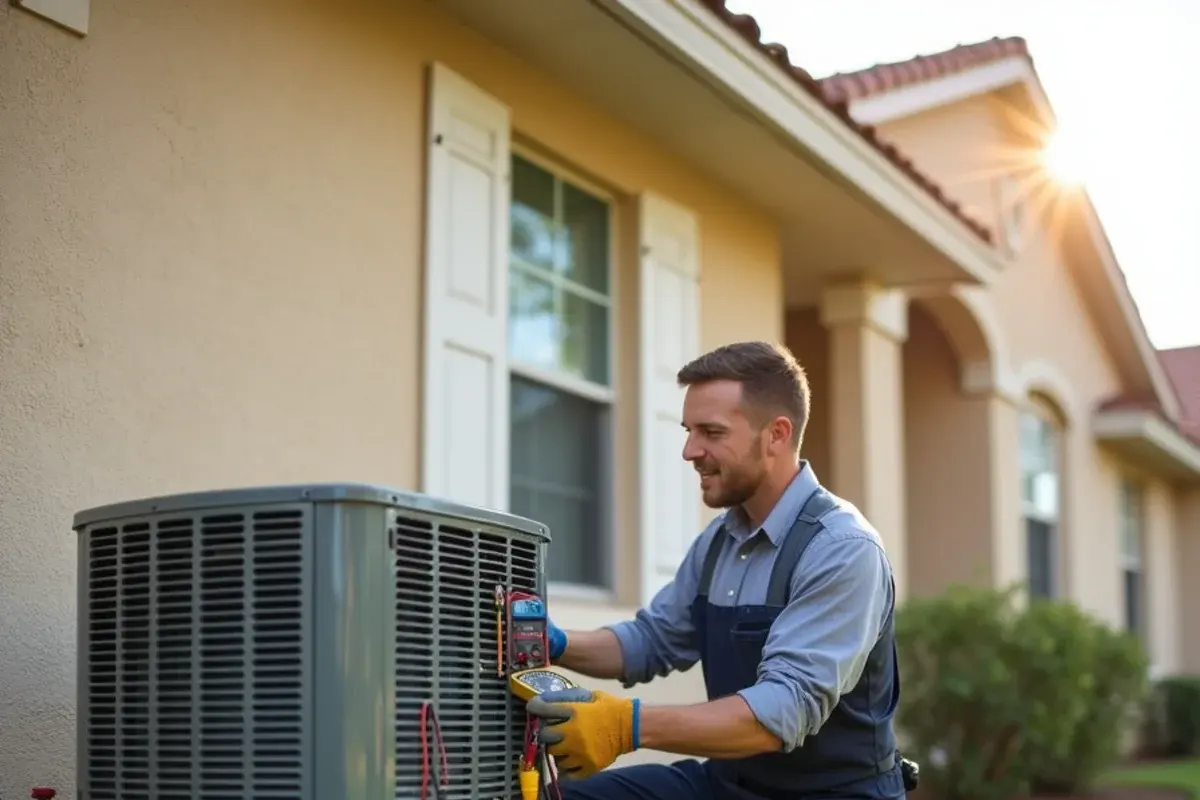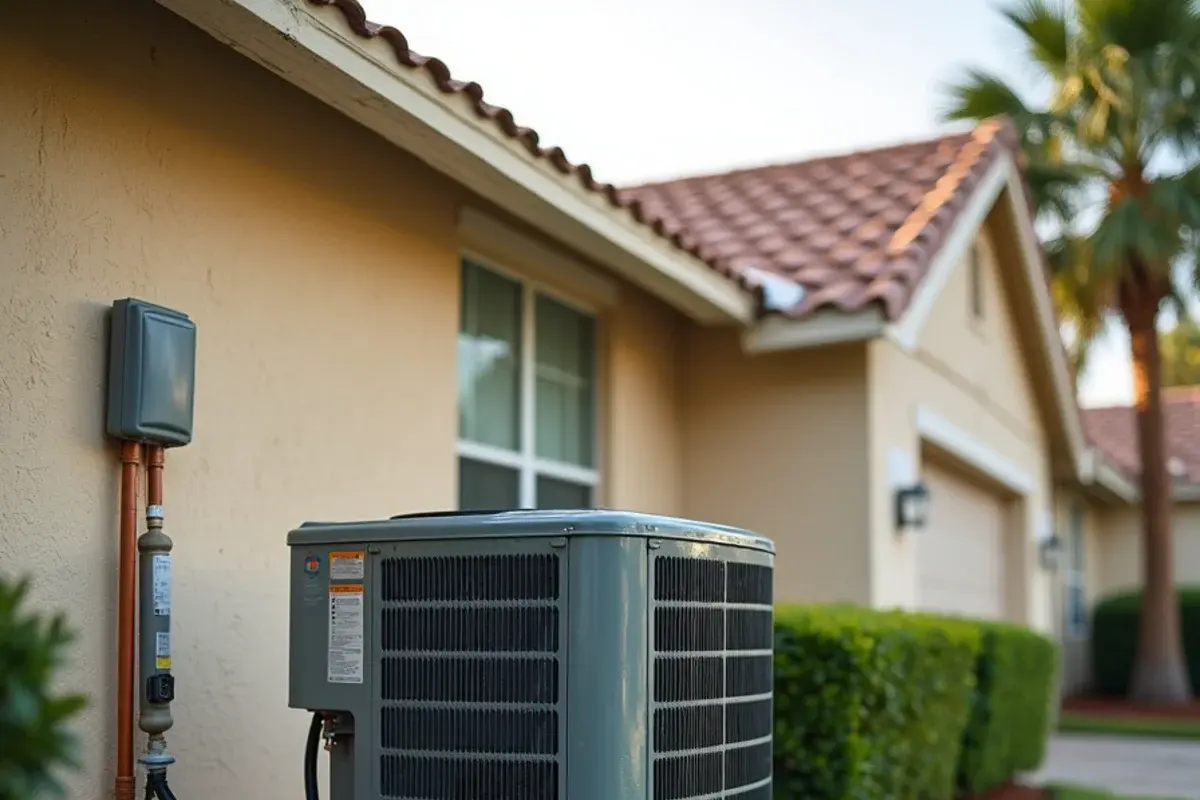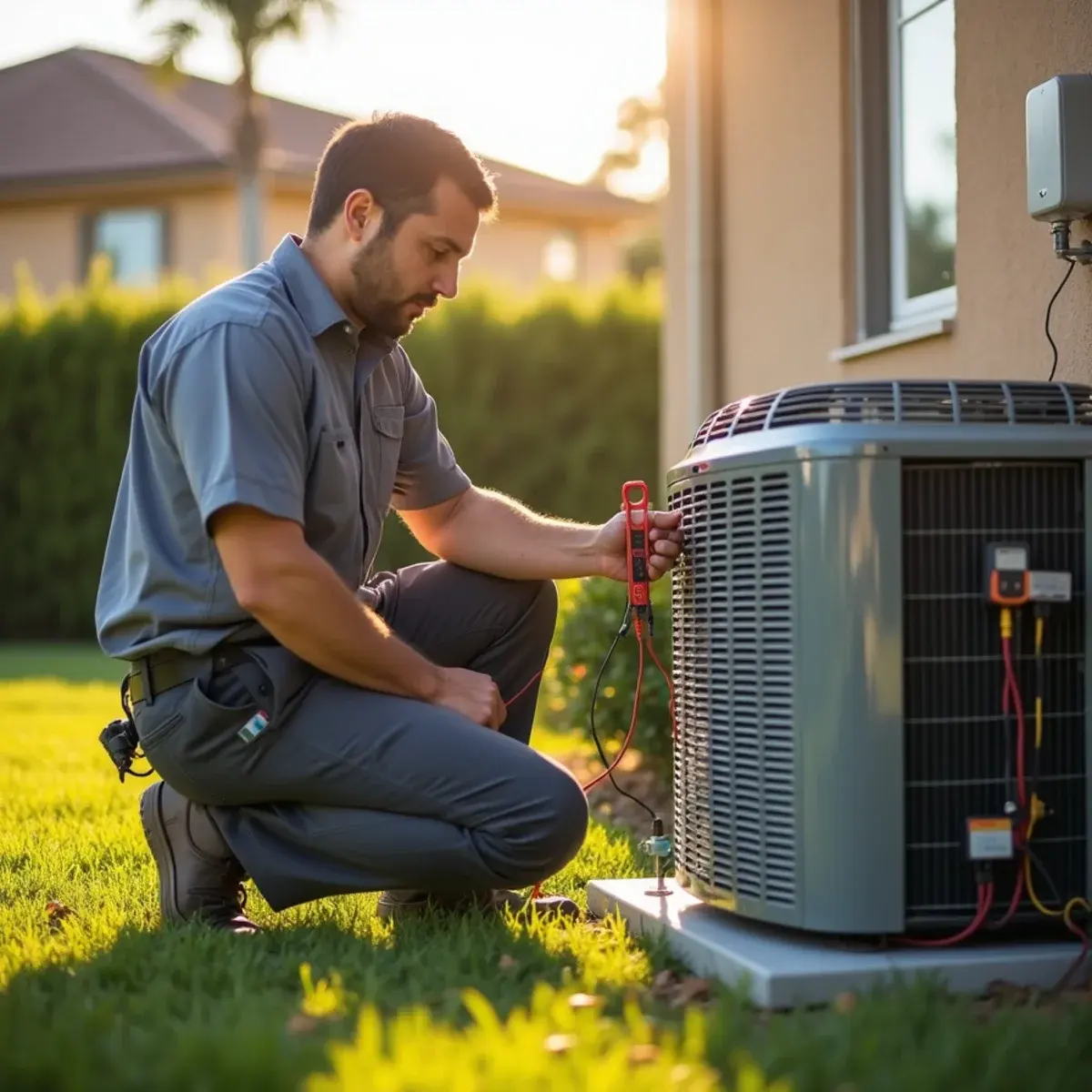
AC repair in Clermont, FL usually comes down to one of five parts: the capacitor, the contactor, the condensate drain, a fan motor or a refrigerant leak. A licensed contractor finds which one with a meter and gauges, tells you the price before touching anything, and carries the common parts on the truck.
When a Clermont house climbs past 80 degrees on a July afternoon, you want the problem found, not guessed at. Call (321) 478-0693 and we answer 24/7, note what the system is doing, and send the nearest available HVAC contractor. Every HVAC contractor we send is licensed and insured in Florida.
The contractor diagnoses first and gives you the price before any work starts. Most air conditioning repair calls in Clermont trace back to a short list of parts: capacitors, contactors, condensate drains, fan motors and refrigerant leaks. Below is how each one shows up in the house and how the technician confirms it before replacing anything.
AC problems we fix in Clermont homes
Most calls start with one of a few symptoms. The table pairs each with its usual cause and the test that confirms it. Two different failures can look identical from the thermostat, so treat it as a guide, not a diagnosis.
| What you notice | Likely cause | What the technician checks |
|---|---|---|
| Fan runs, vents blow warm air | Capacitor, contactor or low refrigerant | Capacitor rating, contactor, refrigerant pressures |
| Ice on the copper line or indoor coil | Weak airflow or a low charge | Filter, blower motor, superheat after thawing |
| Water near the air handler | Clogged condensate drain | Drain line, trap, float switch, drain pans |
| Outdoor unit hums, fan will not spin | Weak capacitor or seized fan motor | Capacitor, motor bearings, amp draw |
| Breaker trips at startup | Grounded compressor or damaged wiring | Winding resistance, insulation to ground |
If the system runs but barely cools, our guide to why an AC runs but does not cool covers seven common causes, a few of which you can check yourself.
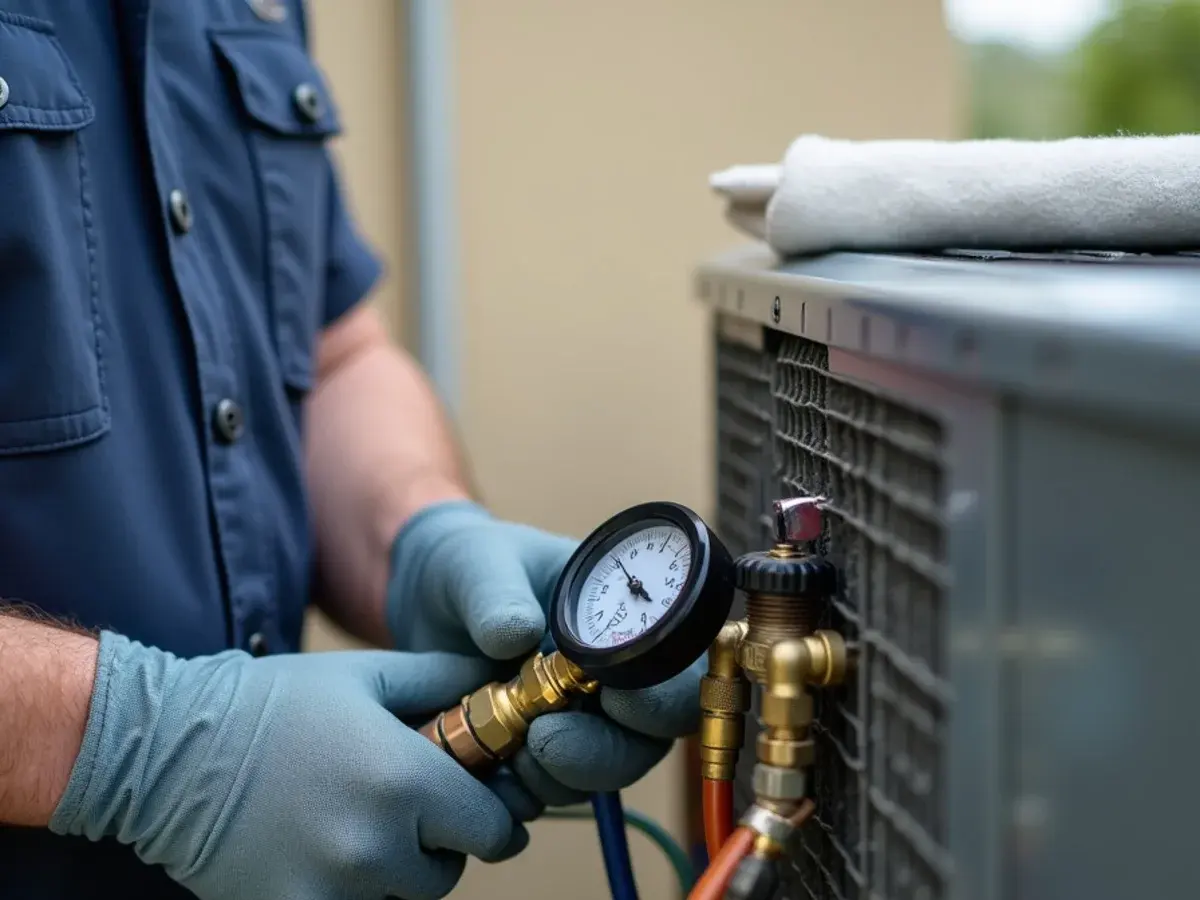
AC running but not cooling: capacitors, contactors, low refrigerant and frozen coils
When your AC is not cooling but air still flows, the indoor blower is fine and something outdoors is not. The dual run capacitor is the usual suspect: it gives the compressor and fan their starting kick, and heat plus storm-season power swings wear it down. Capacitor replacement is one of the quickest fixes on a call. The contactor, the relay that powers the outdoor unit, pits with age and attracts nesting fire ants.
Low refrigerant means a leak
An AC does not use up refrigerant, so a low charge means a leak, often at the evaporator coil, a flare fitting or a rubbed line set. Topping off buys weeks. Real refrigerant leak repair means finding the leak, fixing it, pulling a vacuum and weighing in the charge, done by someone with EPA Section 608 certification.
Frozen evaporator coil
Ice on the indoor coil means too little airflow or too little refrigerant. A clogged filter, dirty coil or weak blower motor will cause it. Switch to fan only so a frozen evaporator coil can thaw; pressures cannot be read on a block of ice.
Water around the air handler: clogged condensate drains and tripped float switches
The evaporator coil pulls gallons of water out of humid air every day, and in Florida the PVC drain line grows algae until it clogs. Then either the float switch shuts the system off (so the AC looks dead), or water overflows into the secondary drain pan and, if that pan is rusted, onto the floor.
If your AC is leaking water, turn it off and call. The technician clears and flushes the line, checks the trap and confirms the float switch cuts power. Repeat clogs call for a cleanout tee and routine AC maintenance and drain line cleaning.
Outdoor unit will not start: fan motors, compressors, lightning and surge damage
When the indoor fan runs but the condenser sits silent, the technician works from cheap to expensive: breaker, control board fuse, contactor, capacitor, then the motors.
- Condenser fan motor: worn bearings or overheated windings. AC fan motor repair usually means a matched replacement motor and a fresh capacitor.
- Compressor: the costliest part. Some only need a hard-start kit; others have windings shorted to ground. Resistance and amp readings decide.
- Lightning and surges: afternoon storms take out capacitors, contactors, control boards and transformers, and no-start calls spike when power returns after hurricane outages like Ian and Milton.
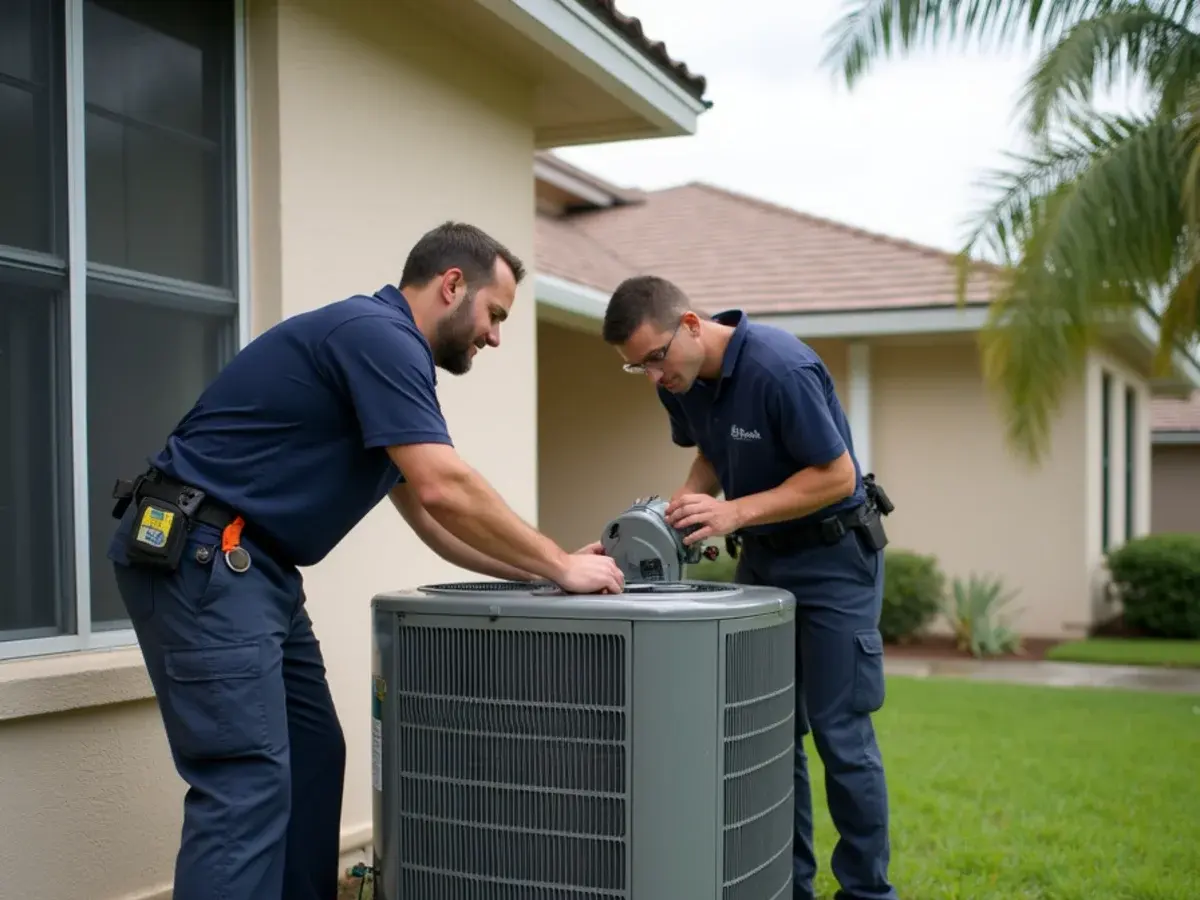
Why systems fail here: 2000s builder-grade equipment, humidity and a cooling season that runs most of the year
Clermont grew fast between 1998 and 2010. Kings Ridge alone added more than 2,000 homes, and Summit Greens, Legends, Heritage Hills and Lost Lake went up in the same years with entry-level heat pumps and air handlers. A Florida system typically lasts 10 to 15 years, so the originals still running are on borrowed time.
Run hours pile up too, because a system here cools most of the year, keeping the coil wet and the drain busy. Original attic flex duct sags and leaks, stretching cycles and mimicking an AC fault. When that is the cause, air duct repair fixes a hot room that no part swap would.
What a repair visit looks like: diagnosis, price, repair, test
- Call. Describe what the system is doing and whether there is water or a burning smell.
- Diagnosis. The technician checks thermostat, filter, breaker and drain, then tests electrical parts and reads pressures.
- Price. You hear what failed and the price before any work starts, with options where they exist.
- Repair. Common parts come off the truck; a specific compressor or coil may need ordering.
- Test. The technician confirms temperature drop, amp draw, drain and float switch before leaving.
Every AC service call follows those steps. Beyond Clermont we dispatch to Minneola, Groveland, the vacation rentals around Four Corners and the rest of our South Lake County service areas.
Repair or replace: how age, refrigerant type and repair cost decide it
Most repairs are worth doing. The call gets harder when these line up:
- Age. Past about 12 years in Florida, a second major failure in one season is a signal.
- Refrigerant. Many pre-2010 systems use R-22, which has not been produced or imported in the U.S. since 2020, so leaks on those systems get hard to justify.
- Size of the repair. A compressor or coil on an older system can be a large share of what a new one costs.
If the technician recommends AC replacement, it should be explained in those terms, without pressure. For the full decision, read repair or replace a 15-year-old AC.
What affects the cost of AC repair
The contractor sets the price after diagnosis, so we do not list prices here. What moves it:
- The part: a capacitor is small, a fan motor more, a coil or compressor the most.
- Refrigerant: leak search and recharge add labor, and reclaimed R-22 is expensive.
- Access: an attic air handler in August takes longer than one in a garage.
- Timing: nights, weekends and holidays can carry after-hours rates, disclosed up front.
For how pricing works locally, see what AC repair costs in Clermont, FL.
Why choose Sugarloaf Cooling for AC repair in Clermont
Plenty of companies say 24/7 and upfront pricing. Here is what that means on an AC repair call through us, in practical terms.
- A person answers at any hour. Call (321) 478-0693 at 2 a.m. in August and you talk to a dispatcher who asks the questions a technician needs answered: is the outdoor fan spinning, is there water, did the breaker trip.
- Licensed and insured contractors only. Every HVAC contractor we send is licensed and insured in Florida. You can confirm the license on the state DBPR site before the work starts.
- Measured, not guessed. Capacitors get tested against their rating and refrigerant gets read with gauges before anything is replaced, so you are not paying for parts that were fine.
- You approve every line. The price comes after diagnosis and before work. If a second problem turns up, you hear about it and its price before that work starts too.
- Honest about older systems. On a 2000s original, you hear when a repair is a good bet and when the money belongs in a replacement instead.
AC repair across South Lake County
The same call covers more than Clermont, and the typical repair changes with the housing. In Minneola, the newer two-story builder homes produce a steady run of clogged drain lines and hot upstairs rooms. In Groveland, the 55+ homes in Trilogy and the 2005 to 2015 subdivisions are reaching the age where capacitors and fan motors give out. Around Four Corners, vacation rentals work their systems hard with full houses of guests. Out west in Mascotte, rural lots mean longer drives, so the dispatcher sends whoever is closest, and in Winter Garden older homes near downtown mix with 2000s subdivisions. Montverde and Oakland are covered too; the service areas page has the full list.
AC Repair FAQ
How fast can a technician get to my home in Clermont?
We answer 24/7 and send the nearest available HVAC contractor, but we do not promise a fixed arrival time. It depends on the time of day, the weather and call volume; the first hot week of the year and the days after a big storm are the busiest. The dispatcher tells you what to expect for your address. If the heat is a risk for an infant, an older adult or someone with a medical condition, say so right away.
Why is my AC running but blowing warm air?
Usually the indoor blower works but the outdoor unit does not. Common causes are a failed dual run capacitor, a burnt contactor, a tripped outdoor breaker, low refrigerant from a leak, or a frozen coil blocking airflow. Confirm the thermostat is on Cool and the filter is clean, then look outside. If the condenser fan is not spinning, shut the system off to protect the compressor and call. If the copper lines are iced, run the fan only until they thaw.
Do you give a price before starting the repair?
Yes. The contractor diagnoses the system, explains what failed and gives you the price before any work starts, and nothing is repaired until you approve it. If there are options, such as repairing a leak versus replacing the coil, you hear each one. Any after-hours rate is explained up front. Sugarloaf Cooling & Heating connects you with independent licensed HVAC contractors who perform the work. Every HVAC contractor we send is licensed and insured in Florida.
Is it worth repairing an AC that is more than 12 years old?
Often, yes, when the repair is small. A capacitor, contactor, drain clog or fan motor on a system that otherwise cools well is usually worth fixing. Replacement makes more sense when the repair is a compressor or evaporator coil, when the system still uses R-22, or when it has needed several repairs in a short time. Many Clermont homes built from 1998 to 2010 sit in that window, so compare the repair price with a replacement quote.
Why does my AC keep tripping the breaker?
A breaker that trips once after a storm may just need one reset. One that trips again is protecting the wiring from a real fault: a failing capacitor that makes the compressor draw too much current at startup, a shorted fan motor, a compressor winding grounded to the case, or a loose or burned connection. Do not keep resetting it, because each restart stresses the compressor. Leave it off and call so the technician can measure amp draw and winding resistance.
How long does a typical AC repair take?
Most common repairs, such as a capacitor, contactor or a cleared drain line, are finished during the same visit once the diagnosis is done. A fan motor usually is too if the right replacement is on the truck. A refrigerant leak repair takes longer because the leak has to be found, fixed, vacuumed and recharged, and a compressor or evaporator coil may wait on a part order. The technician tells you which kind of repair you have before starting.