When an AC runs but does not cool, the cause is almost always one of seven things: restricted airflow from a dirty filter or blocked return, a frozen evaporator coil, a failed capacitor, a stuck or burned contactor, low refrigerant from a leak, a dirty outdoor coil, or a disconnected duct in the attic.
The first two you can often spot yourself. The rest need a technician with gauges and a meter. Start with one quick test. Hold a hand at a supply vent after the system has run ten minutes. A healthy system blows air roughly 15 to 20 degrees cooler than the air going into the return. Cool but weak points to airflow. Room temperature air points to the outdoor unit or the refrigerant.
1. Restricted airflow
The evaporator coil can only absorb as much heat as the air that crosses it. A clogged filter, a return grille blocked by furniture, or a dirty blower wheel cuts that airflow, and the house warms even though everything is technically running. Weak air at every vent is the giveaway.
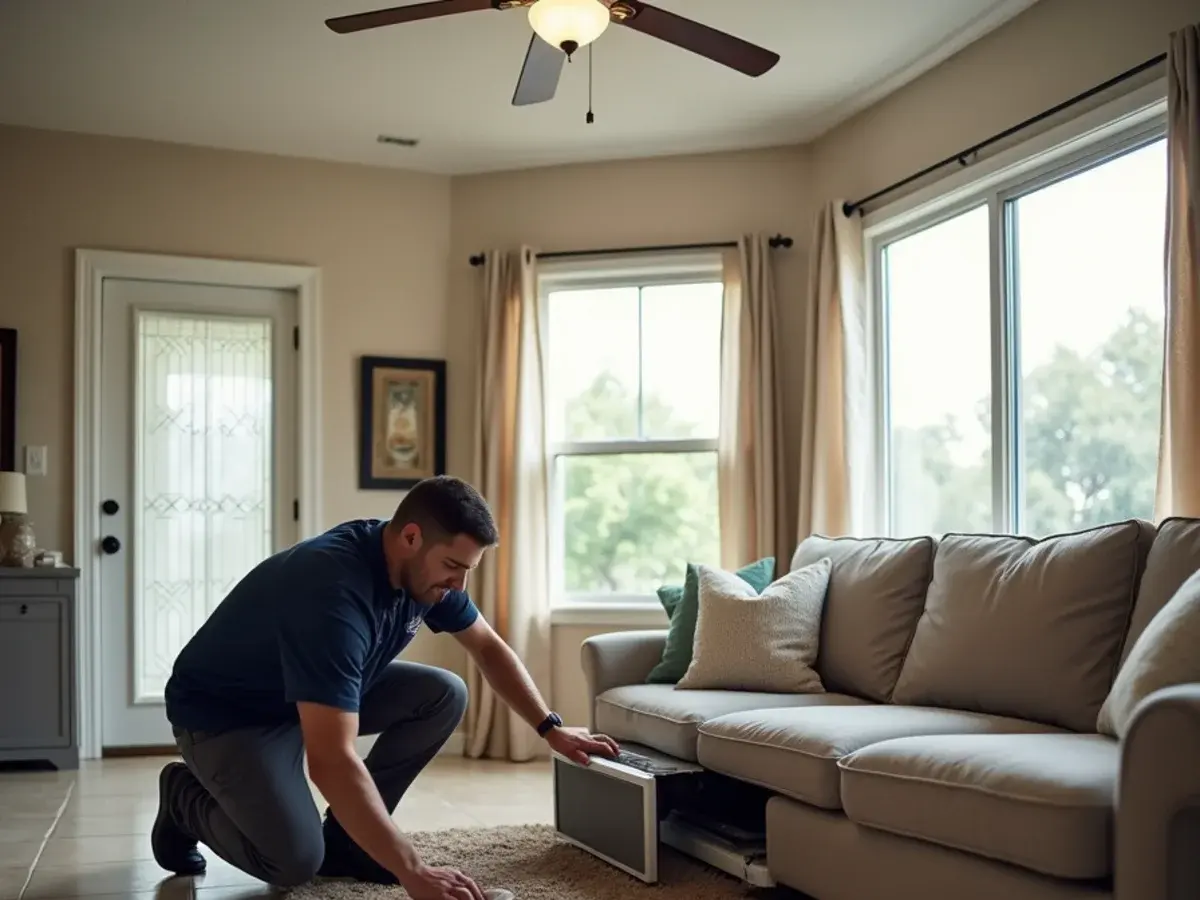
Change the filter and clear the returns first. If airflow is still weak, the technician will check the blower motor, its capacitor and the static pressure across the system, which shows whether the ductwork itself is choking the air.
2. A frozen evaporator coil
Ice on the indoor coil blocks air like a wall. You may see frost on the larger copper line, water pooling around the air handler as it partly thaws, or airflow that fades over a few hours. It is usually a symptom rather than the root problem: low airflow or low refrigerant drops the coil temperature below freezing.
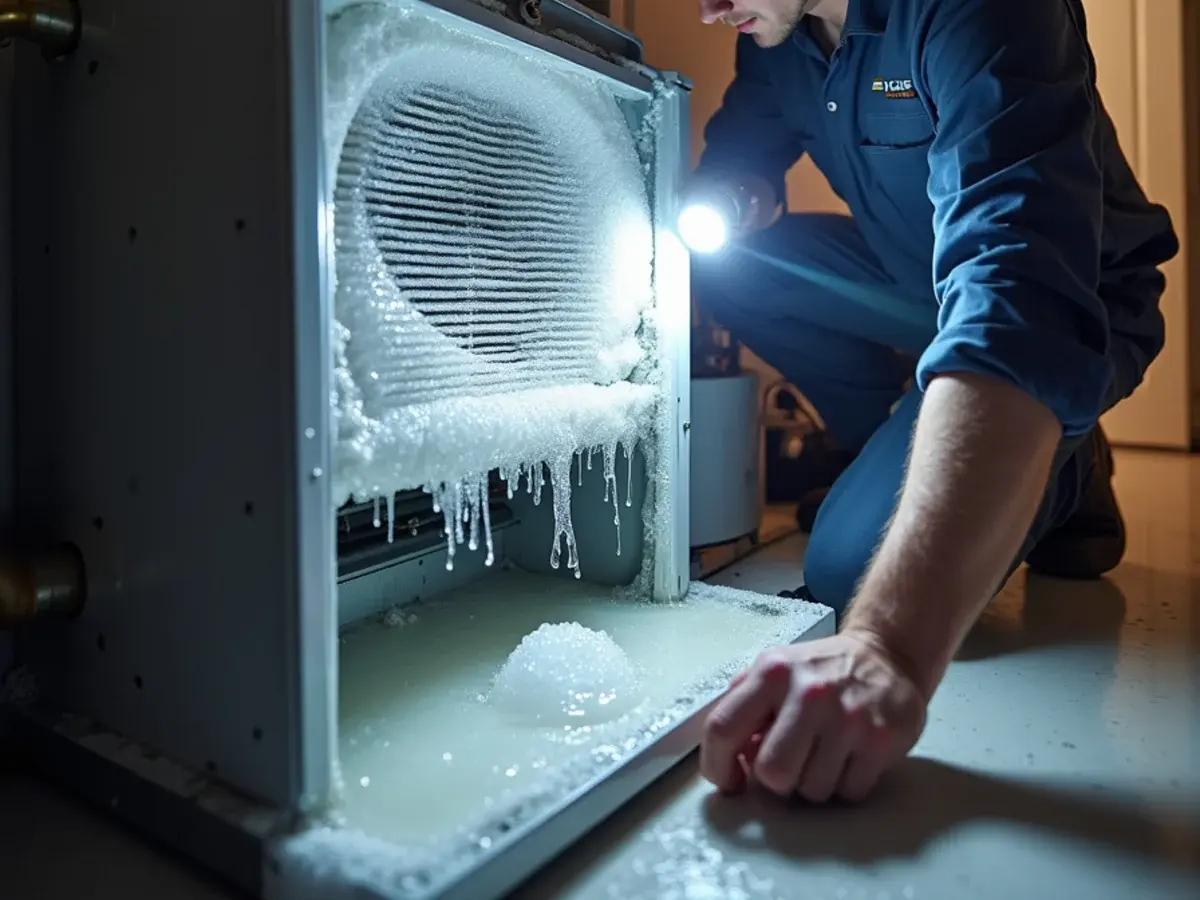
Thermostats set very low make it worse. Short-term rental homes along US-27 and US-192 see this often, when guests set the thermostat to the lowest number and leave lanai doors open to the pool. If you manage a rental there, our Four Corners AC service page covers how those calls are handled. Thaw the coil with the system off and the fan on, then find out why it froze.
3. A failed capacitor
The dual run capacitor in the outdoor unit gives the compressor and condenser fan motor the boost they need to start and keep running. When it weakens, often after a hot stretch or a lightning surge, the indoor blower keeps running while the outdoor unit hums, starts and stops, or runs its fan without the compressor.
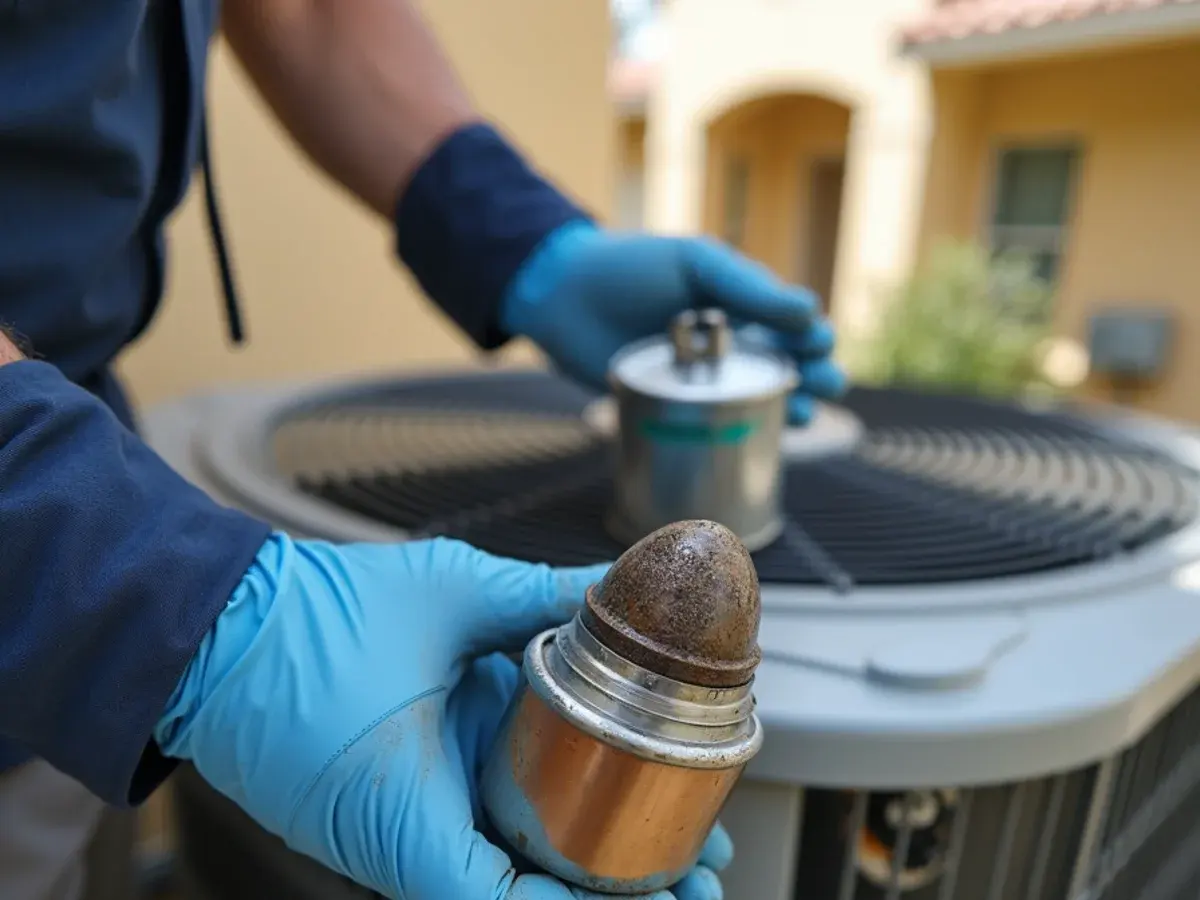
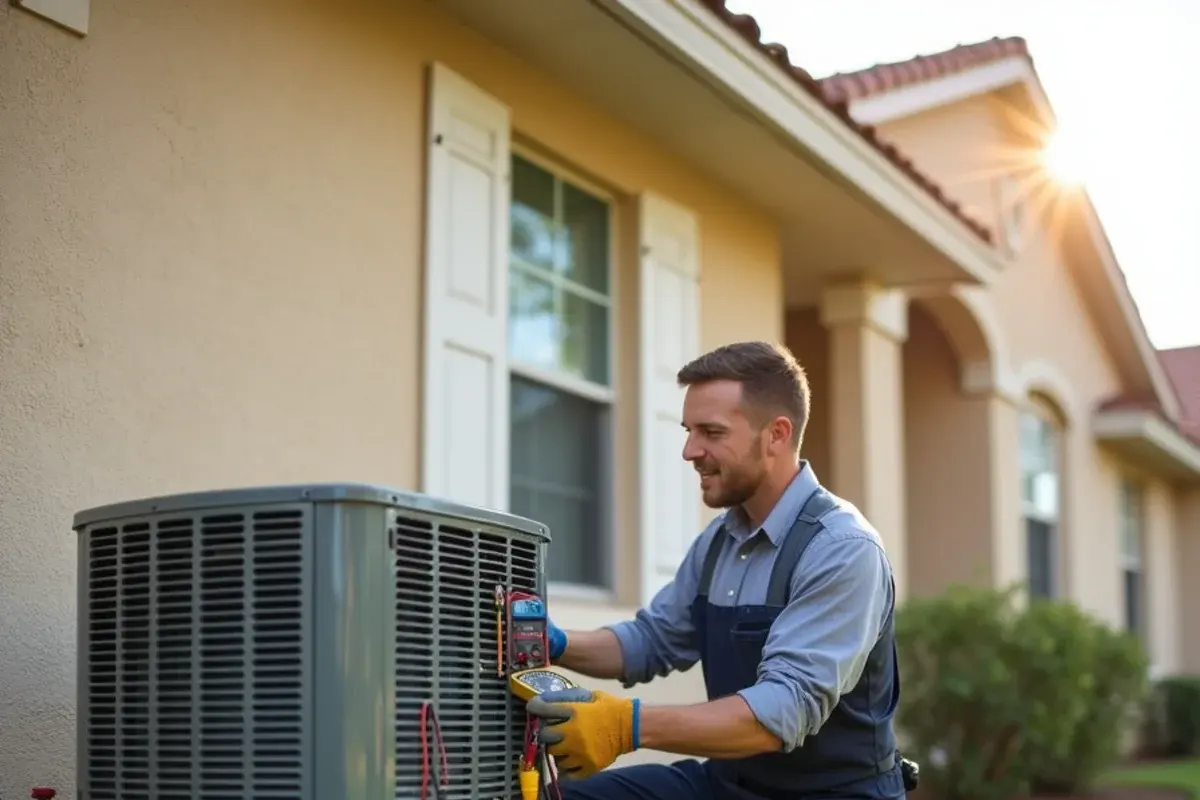
A technician confirms it by measuring capacitance against the rating printed on the part. Capacitor swelling or a domed top is a visual clue. Of the seven causes, this is one of the most common and one of the simpler fixes, but a capacitor stores a charge and must not be touched by a homeowner.
4. A stuck or burned contactor
The contactor is the switch the thermostat closes to send power to the outdoor unit. Over years of cycling, its contacts pit and burn. If they fail open, the outdoor unit never starts while the indoor fan blows room air. If they weld shut, the outdoor unit can run nonstop even with the thermostat off.
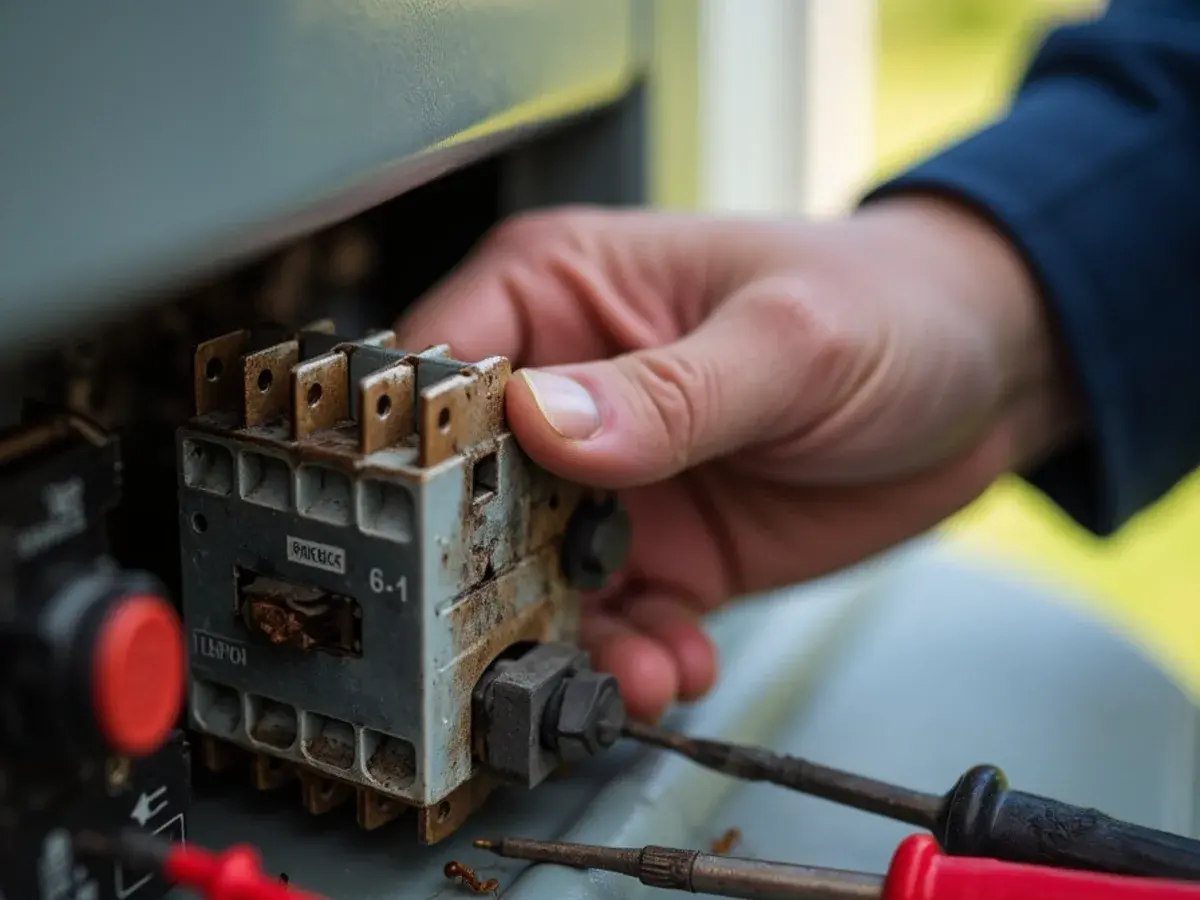
Ants are a Florida-specific culprit. They are drawn to the electrical field and can pack between the contacts until they no longer close. A technician will check the coil voltage, the contact condition and the low-voltage wiring that controls it.
5. Low refrigerant from a leak
Refrigerant does not get used up. If the charge is low, it has leaked, often from a formicary-corroded indoor coil, a vibrating joint, or a service valve. Signs include long run times, warm air, ice on the coil and a hissing or bubbling sound near the lines.
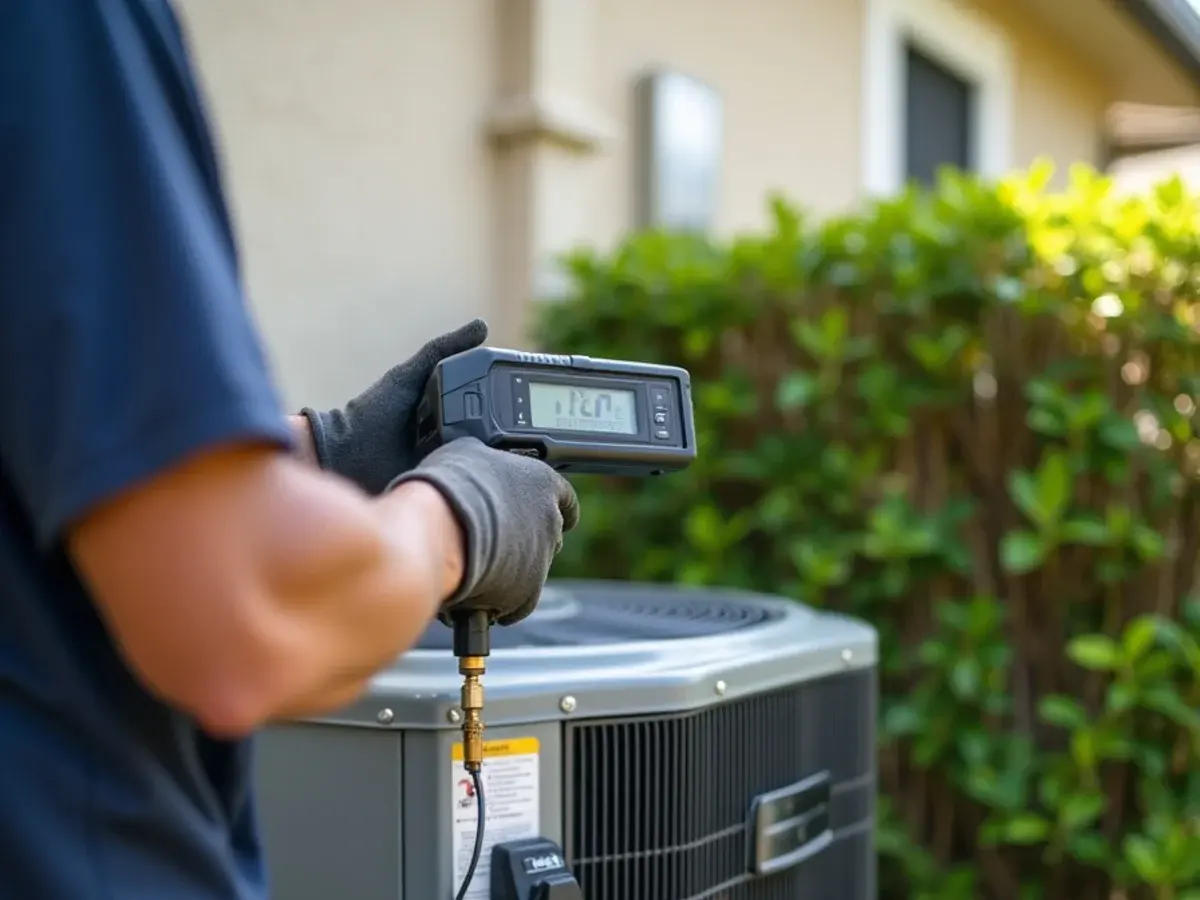
- The technician reads pressures and superheat or subcooling to confirm the charge is low.
- A leak search with an electronic detector, bubbles or a nitrogen pressure test finds where.
- The leak is repaired, the system is evacuated, and the correct charge is weighed in.
The refrigerant type changes the economics. R-22 in older systems is scarce, while R-410A and the newer R-454B are easier to source.
6. A dirty condenser coil or failing fan motor
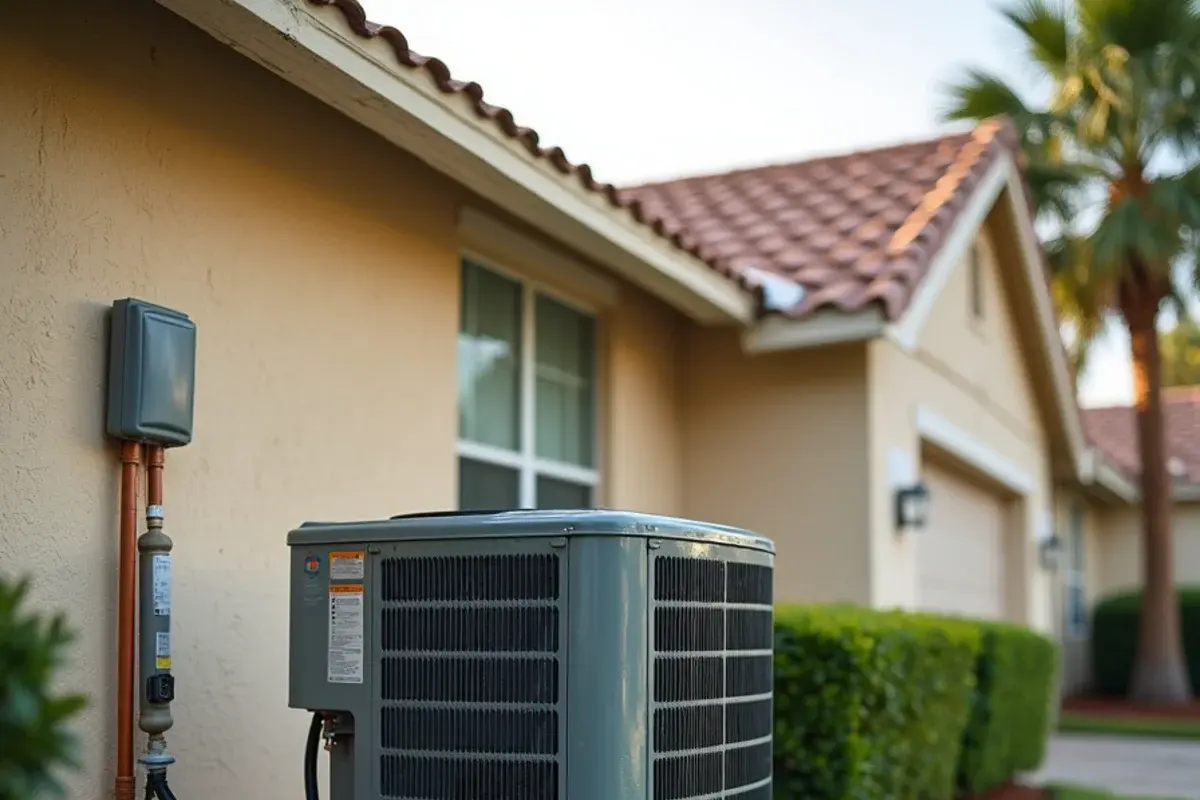
The outdoor unit's job is to dump the heat the indoor coil collected. If its coil is matted with grass clippings, oak pollen and dryer lint, or the fan motor is slowing, the heat stays in the refrigerant and the supply air comes out barely cool. The condenser feels very hot, and the problem is worst on the hottest afternoons.
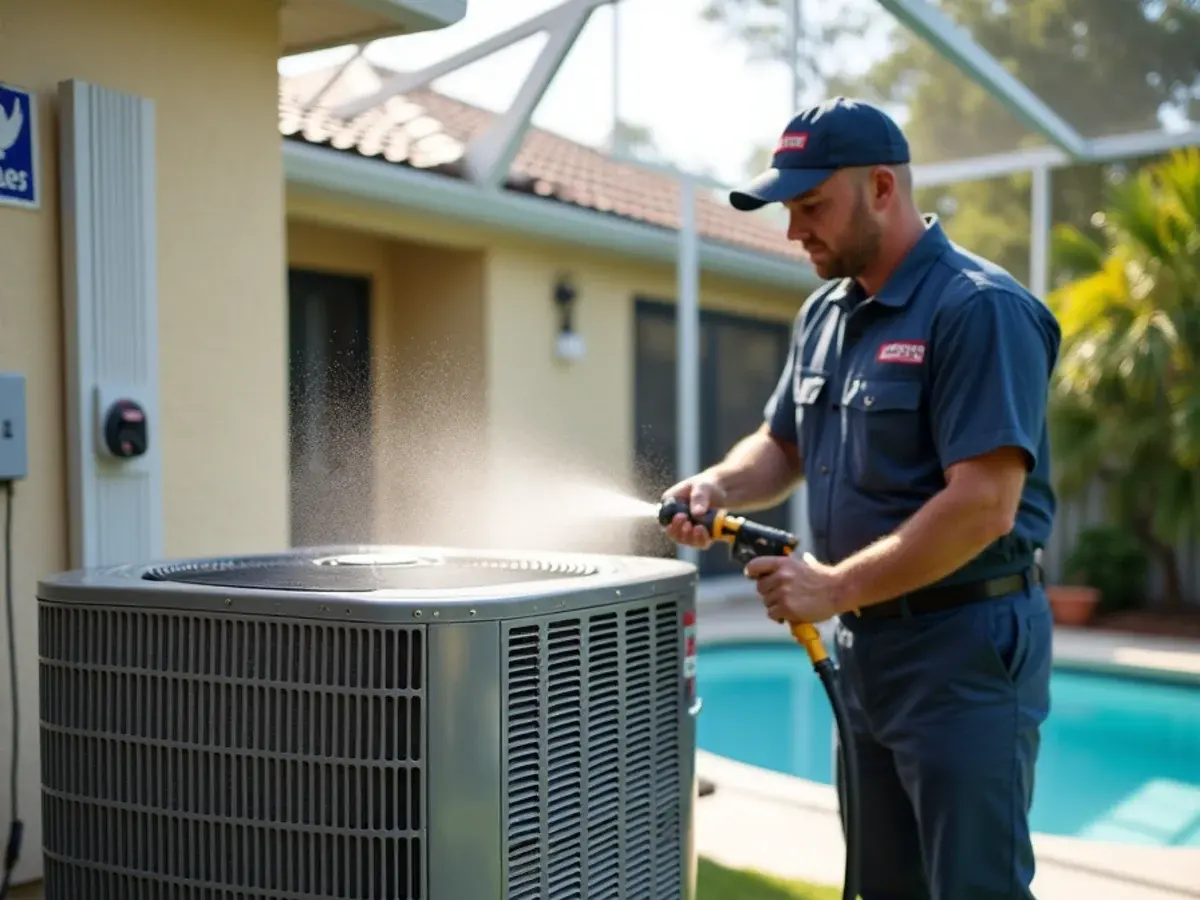
Rinsing the coil gently with a garden hose (power off at the disconnect) can help. A fan that turns slowly, stops and restarts, or will not spin needs a technician to test the motor and its capacitor.
7. A disconnected or crushed duct in the attic
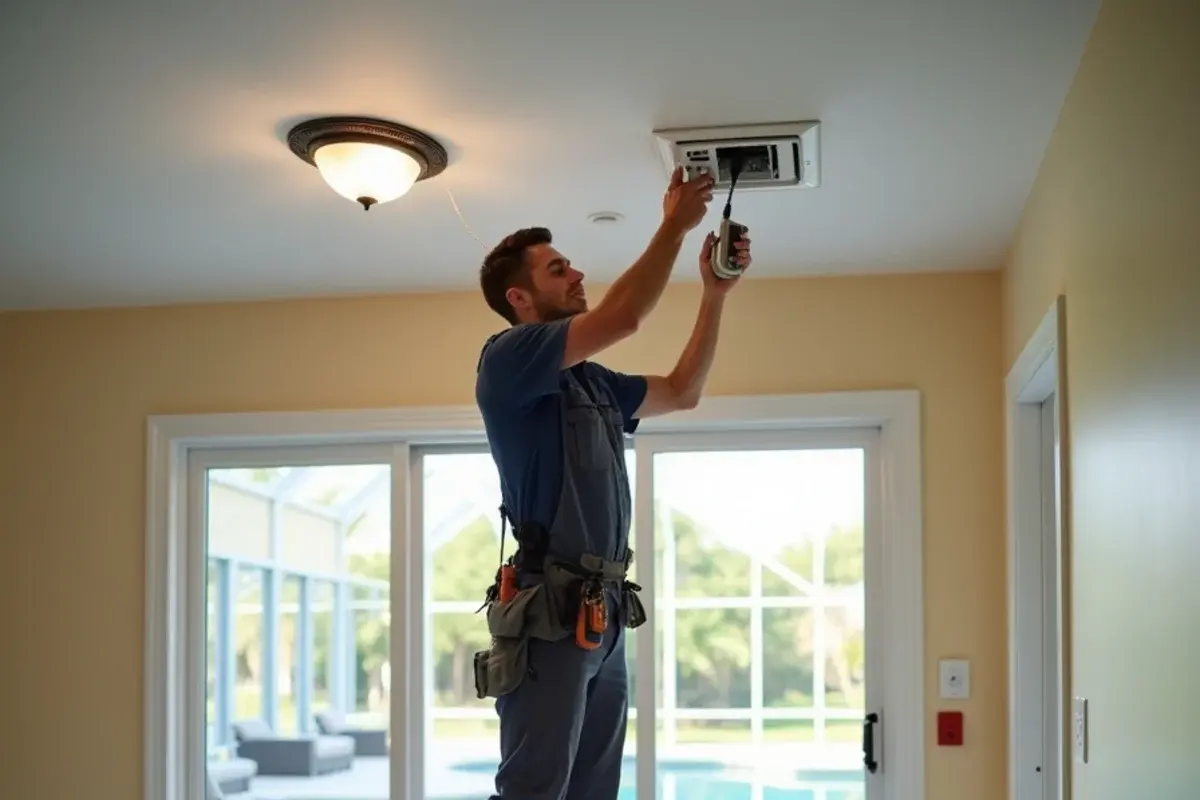
If most rooms cool but one or two never do, look upward. Flex duct in Florida attics sags, gets stepped on, or pulls loose from its collar, and the cold air pours into a 130-degree attic instead of the bedroom. A supply vent with almost no air while the others blow well is a strong sign. The fix may be as small as reattaching and sealing one run.

From the field: how a technician narrows down the seven
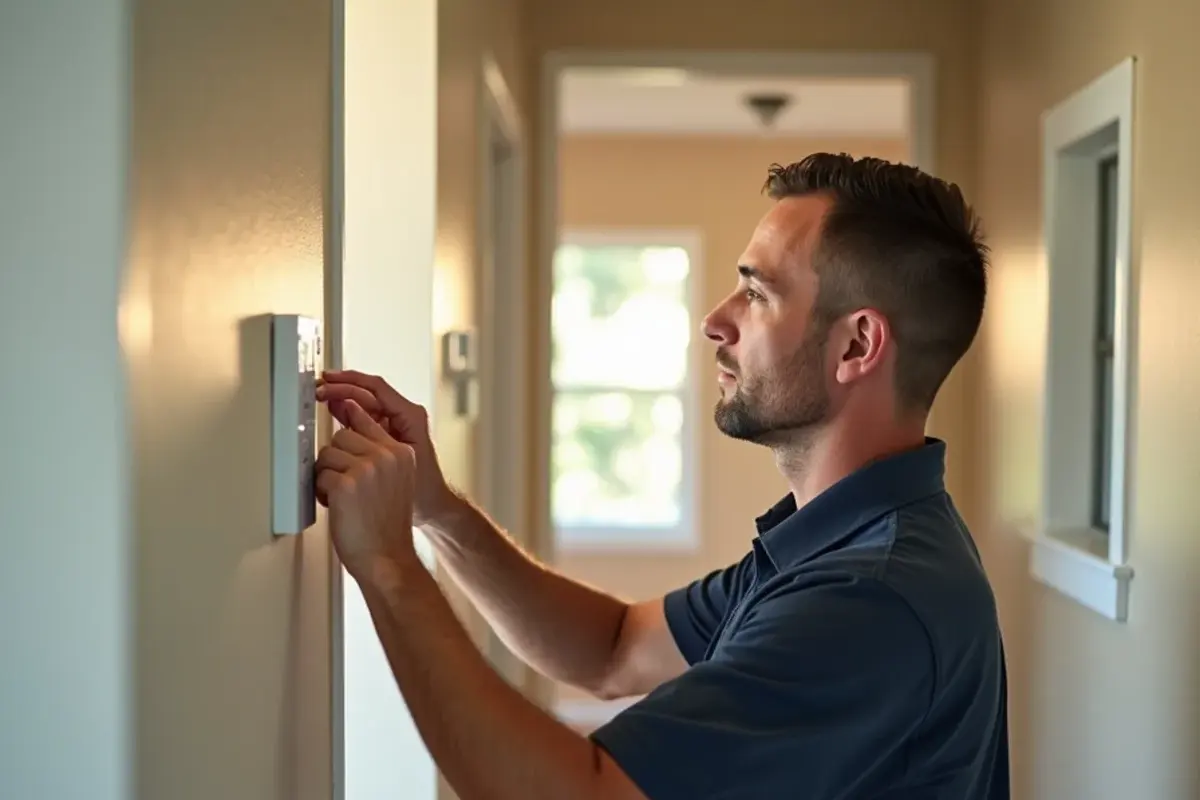
Before any of the seven, check the thermostat. A fan switch set to On instead of Auto keeps the blower moving air through the house even when the compressor is off, and that air feels like a broken AC. It is the single most common no-cost fix on these calls.
After that, a technician works the list in a fixed order, cheapest and quickest first, so you are not paying for a refrigerant search when the problem is a twenty-minute capacitor swap:
- Filter, return grilles and the temperature split at the vents, to separate an airflow problem from a cooling problem.
- The outdoor unit with the panel off: is the compressor running, is the fan turning, and what do the capacitor and contactor measure.
- Refrigerant pressures, superheat and subcooling, only once the electrical side checks out and any ice has melted.
- The coils, inside and out, and then the attic ducts if one area of the house is warm while the rest is fine.
Two causes come back if they are only patched. A dirty outdoor coil and a clogged filter return within a season without regular AC maintenance. A crushed or disconnected attic run keeps one room hot until the ducts themselves are fixed with proper air duct repair, however much refrigerant is added.
Get it diagnosed: call (321) 478-0693
If the filter and returns are clear and the house is still warming, call (321) 478-0693. We answer 24/7 and send the nearest available contractor to diagnose the cause. You get the price before the AC repair in Clermont or anywhere else in South Lake begins. Every HVAC contractor we send is licensed and insured in Florida.
Frequently asked questions
My AC cools during the night but not in the afternoon. Is something wrong?
Possibly. A system that keeps up overnight but falls behind on hot afternoons may be low on refrigerant, have a dirty outdoor coil, or be undersized for the home. It can also be normal on extreme days if the house holds within a few degrees of the setpoint. If the gap grows week to week, have it checked.
Should I turn the thermostat lower to make it cool faster?
No. An air conditioner delivers the same output whatever the setpoint, so a lower number does not speed it up. It only makes the system run longer, which raises the risk of a frozen coil when airflow or charge is already marginal. Set it to the temperature you actually want.
How long should my AC run to cool the house down?
On a summer afternoon in Central Florida, a properly sized system may run for long stretches and still only drop the house a degree or two an hour. That is normal. Concern starts when the temperature keeps rising while the system runs, or when it cannot reach the setpoint even after the sun goes down.
Serving Four Corners, FL, Clermont and the rest of South Lake County.