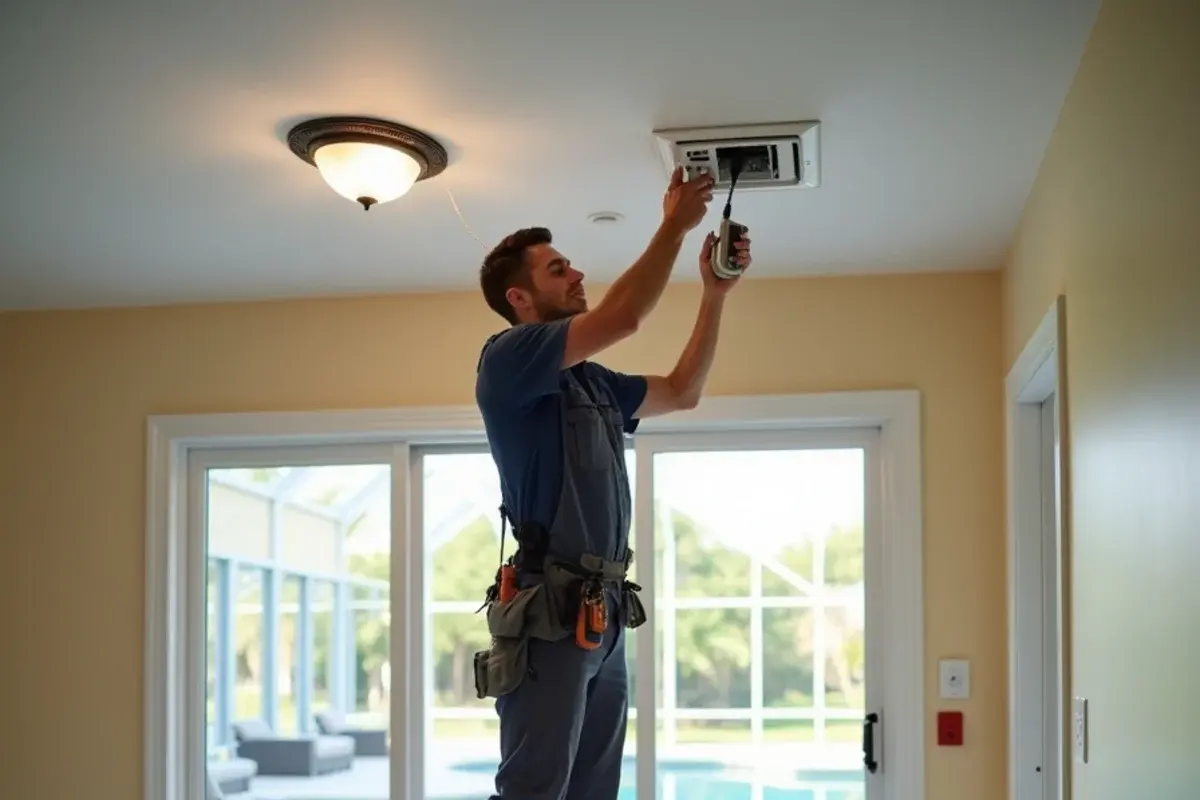
An air conditioner in Clermont runs most of the year, and every hour of runtime pulls water out of humid air, packs dust onto the coils and wears on the electrical parts. AC maintenance in Clermont, FL catches those problems on a mild spring morning instead of a sweltering July afternoon, and the most common failure of all, a drain line plugged with algae, is almost entirely preventable.
Call (321) 478-0693 to book an AC tune-up. We answer 24/7 and schedule an HVAC contractor, who gives you the price before any work starts. Every HVAC contractor we send is licensed and insured in Florida.
Signs your AC is overdue for maintenance
A system can keep cooling for a long time while it slowly gets worse. These are the signs that it has gone too long without a visit:
- Water where it should not be: a damp air handler closet, a stained ceiling under the attic unit, or a pipe dripping above a window.
- Longer run times: the system runs most of the afternoon to hold a temperature it used to reach easily.
- A clammy house: cool on the thermostat but sticky indoors, a sign of a dirty coil or poor airflow.
- Musty air at startup, from growth on the coil or in the drain pan.
- Ice on the copper line or the outdoor unit humming before the fan catches.
- A filter you cannot see light through, or a last service you cannot remember.
Any one of these is worth booking a tune-up for. Water spreading across a floor or ceiling is a repair call, not a maintenance one.
What an AC tune-up includes
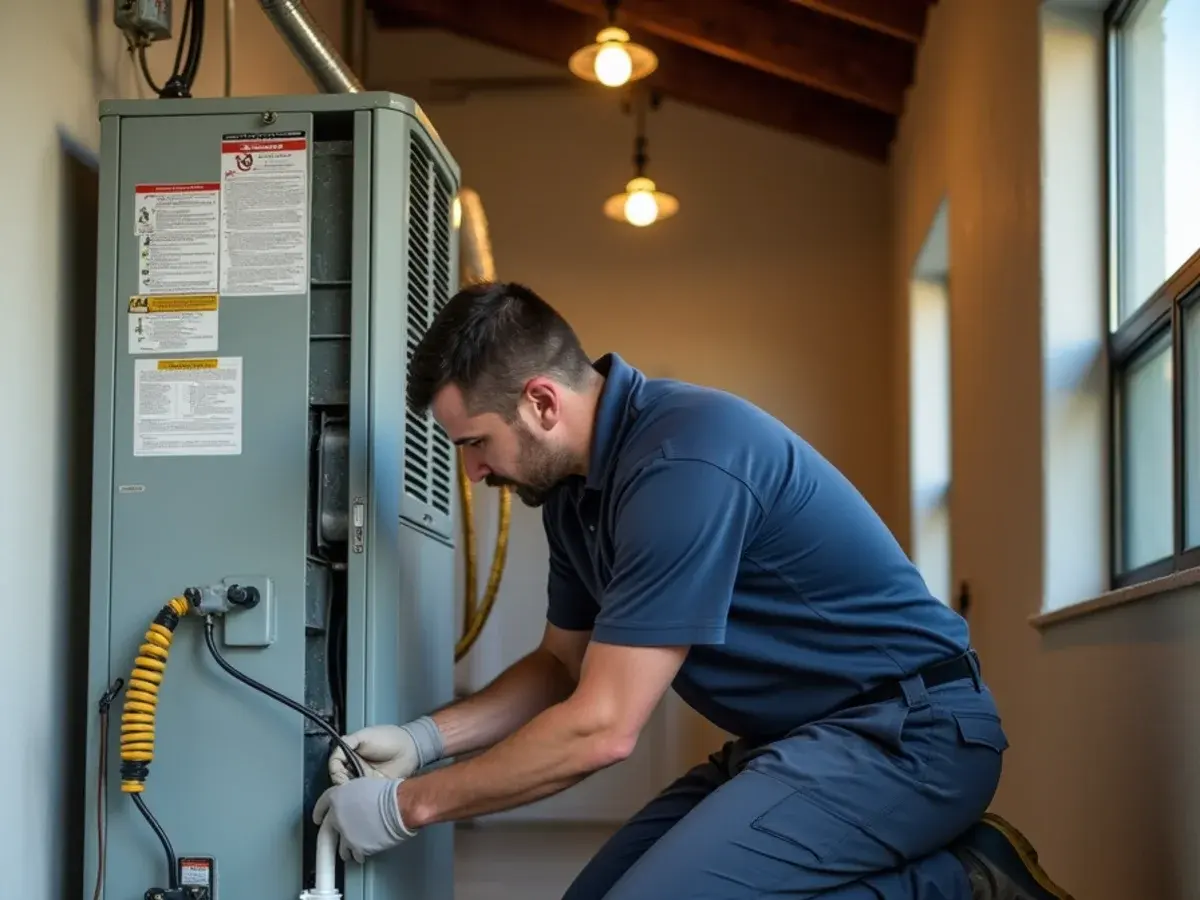
Preventive maintenance is a set of measurements and cleanings. A full AC inspection on a split system covers:
| Component | What the technician does | Why it matters here |
|---|---|---|
| Condensate drain line | Clears the line, tests the float switch | Algae grows fast in warm drain water |
| Secondary drain pan | Checks for water, rust and a working pan switch | The last defense under an attic air handler |
| Air filter | Checks fit, replaces if needed | A clogged filter can freeze the coil |
| Evaporator and condenser coils | Inspects and cleans | Dirty coils cool and dehumidify poorly |
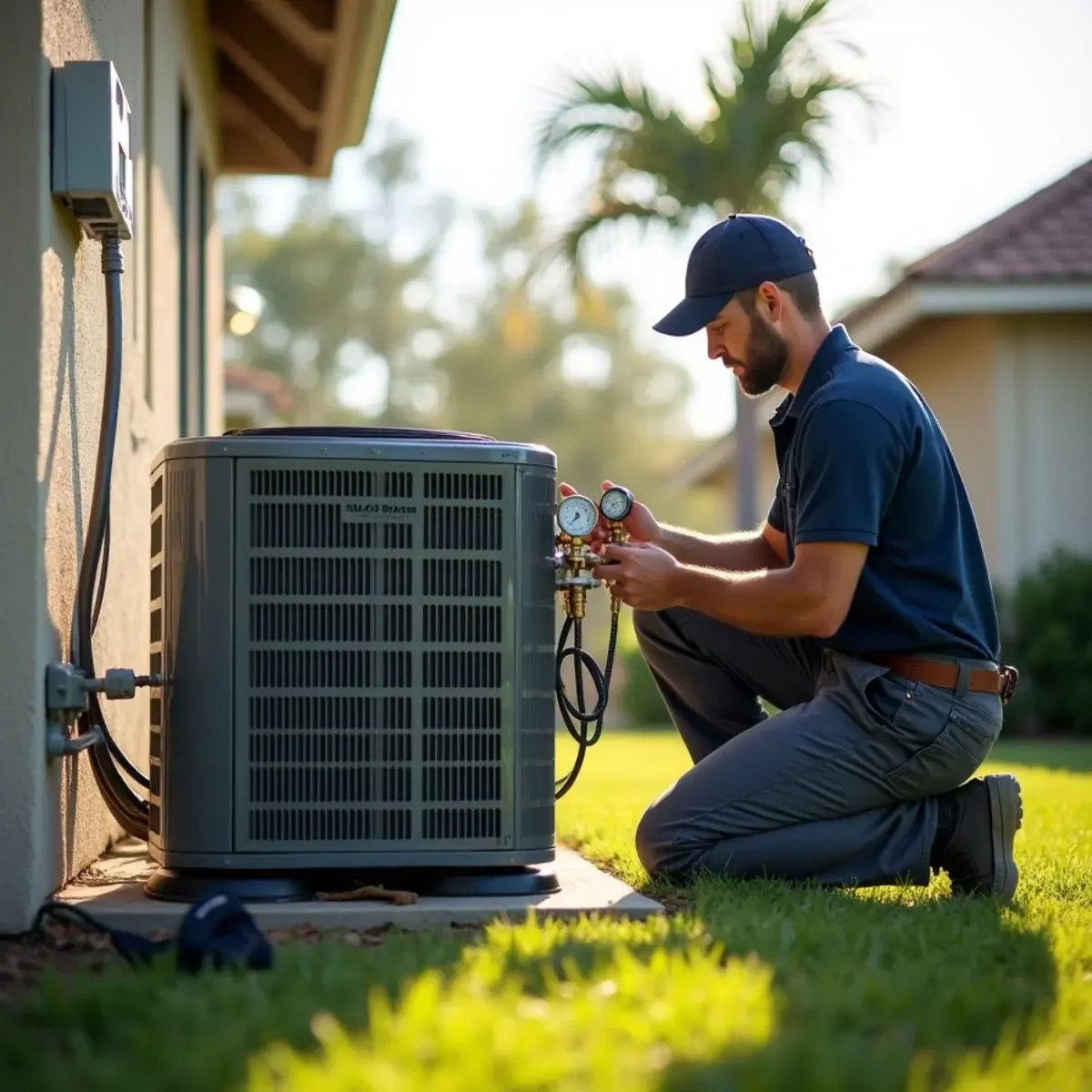
| Refrigerant | Reads superheat and subcooling | A low charge means a leak, not a top-off |
| Capacitor and contactor | Tests against rating, checks for pitted points | Lightning and surges wear both |
| Motors and wiring | Measures amp draw, tightens terminals | Prevents overheating and no-start calls |
| Airflow and thermostat | Checks temperature drop and static pressure | Confirms the system moves enough air |
On a heat pump, the technician also runs heat mode briefly to confirm the reversing valve shifts and the heat strips come on.
Condensate drain line cleaning: the most preventable service call in Florida
On a humid day an air conditioner pulls gallons of water out of the air. It drips off the evaporator coil into the drain pan and out through a 3/4-inch PVC line, and that warm, slow-moving water grows algae until the line plugs.
Then one of three things happens. A float switch shuts the system off. Water fills the secondary drain pan under an attic air handler. Or, in a closet or garage unit without a switch, water soaks the floor and the drywall.
AC drain line cleaning clears the line with a wet vacuum or a flush through the cleanout tee, then tests the switch. Our guide on why AC drain lines keep clogging in Florida covers what homeowners can do between visits.
Coil cleaning, refrigerant check and electrical testing
Coils
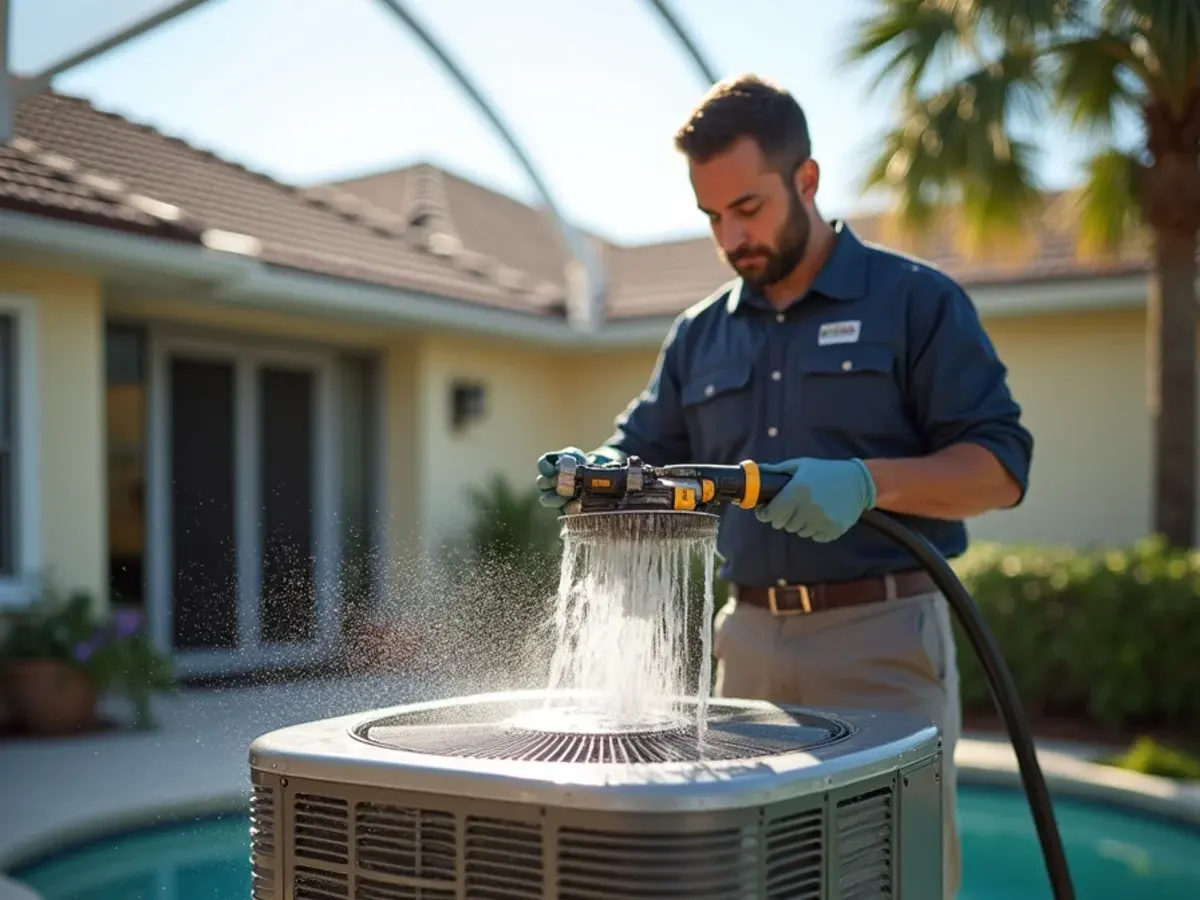
Condenser coil cleaning rinses the fins from the inside out, pushing out grass, pollen and pool-deck debris. The indoor coil is cleaned in place when dust or growth shows, since a dirty evaporator is a common reason an AC runs but does not cool.
Refrigerant
The technician compares superheat and subcooling readings with the manufacturer's data. A sealed system should not need refrigerant every year; a low charge means a leak to find and repair. Only EPA Section 608 certified technicians may handle R-410A, R-22 or newer A2L refrigerants such as R-454B.
Electrical
A weak dual run capacitor often still starts the unit, so only a meter reading catches it. If a part tests out of range, the contractor prices the replacement first, or it can wait for a separate AC repair visit.
How often a Central Florida system needs service
Most manufacturers recommend professional HVAC maintenance at least once a year. Because Central Florida systems cool most of the year and heat on winter mornings, many homeowners book a spring visit before the heavy cooling season and a fall visit for the heating side.
- Systems 12 years or older: twice a year.
- Homes with pets or nearby construction: more frequent filter and coil checks.
- Rentals and seasonal homes: see below.
If a contractor offers an AC service plan, check the visits, drain coverage and after-hours terms. Plan terms come from the contractor, not from us.
Filters, humidity and mold growth in the air handler
In most Clermont homes a 1-inch filter needs changing every one to three months, and monthly with pets or at the peak of summer. MERV 8 to 11 is a common choice; a very high MERV filter in a 1-inch slot can choke airflow.
The EPA recommends keeping indoor humidity below 60 percent. Short cycling, a fan set to On or an oversized system leaves the house cool but clammy, and moisture lingering in the air handler feeds mold on the coil and blower wheel, which you notice as a musty smell at startup.
- Keep the thermostat fan on Auto.
- Ask about a UV light if coil growth returns.
- Consider a whole-home dehumidifier for a tight or often-empty house.
- Fix sweating or leaky ducts with attic duct repair and sealing.
Maintenance for vacation rentals and seasonal homes
South toward Four Corners, thousands of homes rent by the night. Guests set the thermostat to 65, prop the sliding door open to the pool and never touch the filter, and the owner is often out of state.
- Service a busy rental every three to four months, with drain cleaning each time.
- Change filters at every turnover.
- Use a thermostat with set-point limits.
- Leave a door code or lockbox for the contractor.
Seasonal owners should not switch the AC off for the summer: a closed Florida house quickly gets humid enough for mold. Leave it at a moderate setting and have the drain serviced before you go. Part-time residents in Minneola and Groveland follow the same routine.
Before storm season: surge protection and securing the outdoor unit
Summer afternoon storms bring frequent lightning to South Lake County, and a nearby strike can kill a capacitor or control board instantly. Hurricane season runs June 1 through November 30, and after the long outages from Ian in 2022 and Milton in 2024, no-start calls piled up once power returned.
- Surge protection at the condenser disconnect, ideally with a whole-home device at the panel.
- Tie-downs holding the condenser to a level pad.
- A clear yard, so wind cannot throw debris into the coil.
- Breaker off during the storm, and back on once power is steady.
- No restart after flooding until a technician checks the equipment.
Our lightning and hurricane season AC checklist has more. If the system will not start after a storm, go through what to check when your AC stops working, then call for 24/7 emergency AC repair.
How a tune-up visit runs
- Ask first. The technician asks how the system has been behaving, about water, noises, hot rooms or high bills, so the visit looks at the right things.
- Readings before cleaning. Temperature drop across the coil, static pressure, amp draw and refrigerant superheat and subcooling are recorded with the system running.
- Drain and safety switches. The condensate line is cleared and flushed, the float switch is tested by lifting it, and the secondary pan is checked.
- Clean and tighten. Coils are cleaned as needed, the filter checked, electrical terminals tightened, and the capacitor and contactor tested against their ratings.
- Readings after, and a summary. The system runs again so the numbers can be compared, and you get a plain summary of what was checked, anything worn, and the price of any repair before it is done.
Most single-system visits take about an hour, longer for an attic air handler or a heavily dirty coil.
What a tune-up costs and what it prevents
We do not list prices; the contractor gives you one before work starts. It depends on the number of systems, where the air handler sits, the condition of the drain and coils, and any worn parts, which are priced separately and replaced only with your approval.
A tune-up prevents the stained ceiling from an overflowing pan, the capacitor that quits on the first hot day in May and the after-hours call that follows. Call (321) 478-0693 to book anywhere in our South Lake County service area.
Why choose Sugarloaf Cooling for AC maintenance
- Booked on one call. Call (321) 478-0693 any time, including evenings and weekends, and the visit is set up for a day that suits you.
- Measurements, not a quick rinse. The visit records readings before and after, so you know whether the system was actually low on airflow or charge, not just that someone looked at it.
- The drain gets real attention. In Florida the condensate line is the most common avoidable service call, and it is cleared, flushed and switch-tested on every visit.
- Certified hands on the refrigerant. Every HVAC contractor we send is licensed and insured in Florida. Refrigerant readings and any charge work are done by technicians with EPA Section 608 certification.
- No surprise add-ons. Worn parts are priced before they are replaced, and nothing is replaced without your approval.
AC maintenance across South Lake County
Maintenance needs follow how a house is used. Busy rentals around Four Corners need a visit every few months and a filter at each turnover. Newer builder homes in Minneola mostly need their drain lines kept clear and the upstairs airflow checked. In Groveland, many 55+ owners book a spring and fall visit so nothing fails while they are home all day. Older heat pumps on the rural lots around Mascotte benefit from a fall heat-mode check before the first cold morning, and in Winter Garden the 2000s subdivisions share Clermont's aging-system pattern. All the communities we cover are on the service areas page.
AC Maintenance FAQ
How often should I service my AC in Florida?
At least once a year, and twice is common in Central Florida, where systems cool most of the year and heat on winter mornings. The spring visit matters most: it clears the drain line, cleans the coils and catches a weak capacitor before summer. A fall visit checks the heat pump and heat strips. Older systems and busy vacation rentals benefit from drain service every few months.
Does skipping maintenance affect my manufacturer warranty?
It can. Manufacturer warranties vary, but many require registration after installation and exclude failures caused by neglect, such as dirty coils, clogged drains or an incorrect refrigerant charge. If a claim is questioned, maintenance records help. Read your warranty paperwork or look up the model and serial number on the manufacturer's website, and keep every tune-up invoice in one folder.
How often should I change the filter in a Florida home?
For a standard 1-inch filter, every one to three months, and monthly at the peak of summer or in homes with pets. Thicker 4- or 5-inch media filters last several months longer. If you cannot see light through the filter, replace it right away. Avoid very high MERV ratings in a 1-inch slot, which can restrict airflow and freeze the coil.
Can a tune-up lower my electric bill?
It can, if something was wrong. A dirty coil, clogged filter, weak capacitor or incorrect refrigerant charge makes the system run longer for the same cooling, and fixing them brings runtime back to normal. A clean indoor coil also removes more humidity, so a higher thermostat setting feels comfortable. A tune-up will not make an old system efficient, though, and leaky attic ducts often matter more.
What can I do myself between tune-ups?
Change the filter on schedule, keep two feet of clearance around the outdoor unit, rinse grass clippings off the condenser fins gently with a hose, and keep the thermostat fan on Auto. Once a month in summer, check that the drain line is flowing where it exits the house and that the secondary pan under an attic unit is dry. Leave refrigerant, electrical parts and the inside of the units to the technician.
Is an AC maintenance plan worth it?
It can be, if the plan includes what Florida systems actually need: drain line cleaning at each visit, coil cleaning, electrical testing and refrigerant readings, on a spring and fall schedule. Plans are offered by the individual contractors, so read the terms: number of visits, what counts as a repair, any after-hours conditions and how to cancel. For a vacation rental or an older system, scheduled visits usually pay for themselves in avoided emergency calls.